

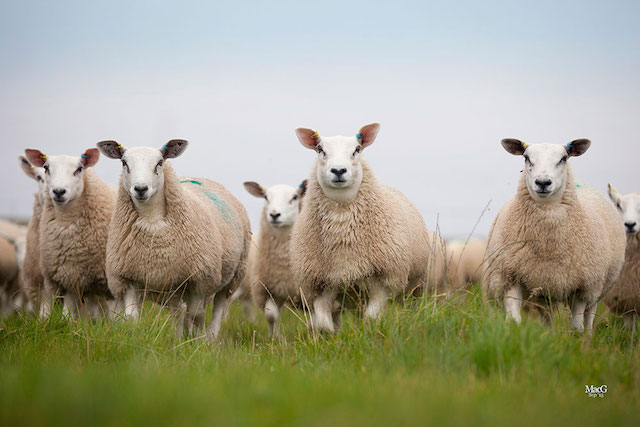
As the number one sire breed in GB and with more than 17% of all ewes carrying Texel genetics the breed’s influence on Welsh sheep farming is second to none.
The recent introduction of economic selection indexes for both terminal and replacement traits within the breed, means this influence can be better targeted in future, says Texel Sheep Society chief executive John Yates.
Speaking ahead of Welsh Sheep Mr Yates said the Society had introduced these new indexes to enable ram buyers to make more informed buying and breeding decisions helping boost flock profitability.
“Introducing economic indexes has also simplified the selection criteria for buyers, with both indexes presented as the potential extra profit per lamb born in a commercial setting, compared to population average. In simple terms, the higher the value, the better the performance of the animal.
“Farmers retaining female replacements should use the replacement index to select breeding stock as this index includes maternal traits alongside meat traits, to give a balance of characteristics on both sides of the breeding goal. Those solely producing prime lambs should use the terminal index as this is weighted for meat production.”

Introducing economic indexes also has the potential to increase the benefit Texels bring to the industry, he added. “A 2022 study commissioned by the Society and conducted by world leading genetics consultancy AbacusBio found that expected genetic improvement in the Texel breed over the next 20 years will be worth £23.5m/year to the UK sheep industry.
“However, introducing economic indexes to the Texel breed offers the opportunity to increase future benefits by £1.2m a year.”
Mr Yates said that while many still view the breed as solely a terminal sire breed, its influence has significantly increased over the last 20 years as increasing numbers of farmers have recognised the breed’s exceptional maternal traits.
“No other single breed has as much influence on the industry as Texel does. Its combined terminal and maternal influence is huge and the added value Texel brings to a wide variety of farming systems cannot be underestimated.”
Further supporting the future of the sheep industry, the Society will once again by sponsoring the NSA Next Generation Young Shepherd competition at Welsh Sheep.
Mr Yates said the Society’s continued support of this competition was just one of a number of activities the Society undertakes in support of the younger generation. “There is no doubting that with a changing focus in agricultural support across the UK in future years the sheep industry is facing challenging times.
“The sheep sector has plenty of enthusiastic young entrants, but they need every opportunity available to them to succeed. This is vital if the UK is to remain a competitive player in the world sheep industry,” he explained.