

FAQs
This page has been split into sections covering evaluations, Indexes, genomics, Microphthalmia and Maedi Visna.
Evaluations and Reporting Questions
When we weigh and scan, how are naturally born and reared lambs differentiated from ET lambs that have the advantage of being reared by a very milky commercial ewe?
In the monthly evaluation, natural / AI lambs have the biological (genetic) mother recorded as the rearing dam, whereas ET lambs have the recipient dam recorded as the rearing dam. This differentiation of the rearing dam and inclusion of a maternal effect in traits such as birth weight (the ability of a ewe to provide nutrition in utero) is done to account for the genetic and environmental influence of the [rearing] dam on the lamb’s performance, correcting for these influences allows a more accurate prediction of the lamb’s genetic merit.
How do our lambs compare with other breeders’ that have ad lib creep daily to scanning, when ours will be reared on their natural mothers with limited creep?
The monthly evaluation makes a correction for ‘fixed effects’ such as flock or year, that aims to take into account the variation in management and environment across different flocks. Greater connectivity between flocks (through use of shared rams for example) would improve the accuracy of these corrections.
The change to a genomic evaluation will likely also help to correct for farm-to-farm variation. Analysis of other populations suggests that use of genomic information increases estimates of connectedness and confidence in the breeding values produced.
Do we, as breeders, need so many things included in the full reports?
The full report is provided so that breeders can select the information they need. One breeder may want to see muscle depth figures for their animals whereas another may value CT traits. By providing all information in an editable format (Excel), means breeders are able to use the information that’s of value to them.
Can the summary report show the figures the old Signet figures showed, which were fairly easy to explain to a buyer, perhaps with the columns being smaller?
The summary reports have recently been refined and are designed to be printable on a single A4 page; these include information on index and sub-index values. Following the split of the carcass sub-index, they now also include [separately] the value of muscle and fat traits as well as growth, reproduction and adult size (for the replacement index) alongside the pedigree information.
The inclusion of raw values could be misleading when comparing between animals because they’re influenced by other factors, such as weight. For example, comparing the muscle depth figures of two animals may not be appropriate if one animal weighed 35 kg when measured and the other weighed 55 kg.
We’re encouraged to have our lambs CT scanned which, although subsidised, still involves a cost. If this benefits all breeders, shouldn’t we be paid for taking a day out to do this rather than incurring costs?
CT scanning lambs has multiple benefits to the individual animals scanned, their relatives (likely in the flock of the scanned animal) the breed, and the wider industry.
Because of these layers of benefits, subsidies are applied to the costs of CT scanning from the Society. In addition to the subsidy, the Society fund the collection of DNA and genotyping of all CT scanned Texel animals at no cost to the breeder. This provides further benefits to the flock through increased accuracy of breeding values, confirmation of parentage and Scrapie, Microphthalmia and MV genotype information.
How have the lambing ease and birth weight breeding value calculations changed?
Both lambing ease and birth weight have had the maternal effect calculation updated (this captures the ability of a dam to lamb easily and provide nutrition in utero). In addition, an ‘environmental dam effect’ (ease of lambs to be born) has been included in lambing ease, replacing the litter size group effect. It is likely that these changes will increase the spread of breeding values and produce larger negative values for animals that produce difficult lambings.
Economic Index Questions
What is a £ index?
The £ index represents the extra profit value per commercial lamb produced compared to the population baseline. The higher the value the greater the genetic merit. The calculated values are based on commercial financial data and the animal’s own breeding values. They can be used to rank and compare animals to each other.
Why has the Society changed to using £ indexes?
The changes have been designed to encourage more commercial producers to use performance information when buying pedigree Texels. The indexes are designed based on the assumption that breeders breed animals for commercial producers. Even though animals are traded between breeders, the main aim is to produce the best rams possible for commercial farmers. While the information provided in the indexes quantifies the benefits in terms of commercial outputs, the tools are still valid for use by pedigree breeders.
The £ indexes effectively rank animals based on the expected improvement in performance due to genetics, in economic terms. Farm business economics are important and becoming more so. The development of these indexes simplifies the use of performance information for both breeders and commercial producers.
How have the £ indexes been developed?
The Society have worked with AbacusBio, global leaders in agricultural consultancy to develop economic models that capture the value of genetic improvement. These models have then been used to calculate multi-trait indexes for Texel animals.
Do any other breeds have £ indexes in the UK?
The Texel is the first sheep breed in the UK to introduce £ indexes based on an economic model. Breeders in Ireland and NZ have been using economic indexes successfully for several years.
What is the benefit of a £ index compared to the previous indexes used by the Society?
The £ index is easier to understand than the previous index and simply presents the relative contributions of related traits that are relevant for both commercial producers and pedigree breeders in financial terms.
Didn’t the previous index include economic considerations?
The previous index did not include economic considerations in its formulation. Even if it had, it would be grossly outdated and was not presented in units that demonstrated economic considerations.
What makes £5.50 and £8.20 any easier to understand than 180 and 310 [for example]?
The key difference is that the Society’s economic indexes are data driven. There is a reality to the £ figures because they are based on profit calculations for an average UK sheep production system. Whilst the £ index figures are not necessarily more comprehensible per se, what they do change is the communication of genetic merit because they link genetic merit directly to farm profit outcomes. In communication about the genetic merit of a ram, the index provides a tool to describe the expected average profit per lamb born to that ram(s), compared to another ram(s). The same sort of language and meaning cannot be used with the old index.
In addition, the new indexes accurately capture the difference in value created by using rams for maternal purposes (because daughters retained express the genetic merit of their sire over multiple years / lambings) compared to terminal purpose (all lambs slaughtered so only express genetic merit over a short period of time). The previous index did not do this, so it was not a reflection of the true expression of merit.
Is the £ index a true relative financial value?
Yes, it is the profit value per commercial lamb born calculated on the assumption that slaughter lambs are produced on a grass- and fodder-based commercial system.
Why has a terminal sire breed launched a replacement index?
The Texel is no longer a single-use breed, it is increasingly used to produce replacement females. The most recent study of the breeding structure of the British sheep industry [2021] indicated that over 17% of the national ewe flock contains Texel genetics. Therefore a replacement index is critical to help breeders and producers select the right female replacements, and sires to produce them.
Do we halve the £ index value to get the amount the ram will contribute to his progeny like with previous EBVs?
No, the £ index is the profit per lamb that is due to the sire or dam’s genetics. The halving of values has been included in the index calculations.
When either index is used, half the genes come from the sire and half from the dam. Whether the ram is used for pedigree or commercial use, they still pass on half their genes. Pedigree breeders have the benefit of knowing the estimate of merit of the dam (whereas a commercial farmer breeding replacements does not). Pedigree breeders can estimate the merit of any progeny by taking the average index values of the sire and dam. That index value (for the progeny) would represent what they would pass on.
Has the baseline which sets the benchmark thresholds (e.g. top 5% and top 1%) been adjusted?
No, it hasn’t been altered, this allows comparison of all animals within the breed against a fixed standard.
Will the ranking of my animals have changed following the launch of the new £ indexes?
There will have been some re-ranking of animals using the terminal index. This is because the £ index contains different traits and emphases than the previous index (Figure 2). The overall goal remains the production of profitable lambs.
 Figure 2. Comparison of trait weightings between terminal £ index (outer ring) and previous terminal index (inner ring). Growth traits are in shades of blue, muscle traits in shades of green, fat traits in brown and lambing ease in grey.
I use the texelplus service, how will the reports differ?
The reports have been updated to reflect the new indexes. They are downloadable from the reports page on iTexel in full (Excel) and summary (pdf) format. When logged in to iTexel, texelplus breeders will be able to see indexes for all sheep (not just those in their flocks). Indexes for animals not in texelplus flocks will only be published when their accuracy is above 50%.
Will ewes and rams have the same £ indexes?
Yes, the indexes for all animals have been calculated in the same way and they should be used in the same way for male and female animals. If a pedigree ewe is going to be used to produce replacement females then the replacement index is the one to focus on. If she is going to be used to produce slaughter lambs (or possibly more likely, aim to produce sires that will in turn produce slaughter lambs), then the terminal index will offer greater insights into her genetic potential.
The pyramid structure of the sheep industry contains elite, multiplier, and commercial producers. If the economic indexes aim to encourage uptake of information by commercial producers, are they relevant to elite and multiplier flocks?
Yes, the indexes are relevant for all producers because genes flow from the pedigree tier to the multiplier, and commercial tiers. Selection decisions made at all tiers can, and should, be based on the value created for the user of the ram(s) / genetics.
The elite tier
Even with trade in the elite tier for high value prices, the estimates of genetic merit are important. A broad set of factors are taken into consideration when pedigree breeders trade, but one of them must be the index because that is the measure of the overall genetic merit of the animal (alongside the more granular breeding values). When a pedigree-to-pedigree animaltrade takes place, the index can be used as a way of describing value linked to the intended use of that animal. The purchaser would plan to retain daughters (otherwise there would be no value in the genes of the purchased animal to the purchaser). In this instance, the maternal index is the index to use for making selection decisions.
The purchaser may also sell offspring for replacement, crossing or terminal use. In this case, the purchaser could consider both the replacement and terminal indexes of the animal they are buying.
Alternatively, they may buy a high-merit replacement index animal to produce the elite replacements for their pedigree flock and a terminal ram to produce rams to sell to commercial farmers looking for a Texel terminal sire.
The multiplier tier
For Texel rams used in the multiplier tier, the income stream is driven by the daughters produced that are sold to the commercial tier. The replacement index is perfectly relevant to this situation because it provides an estimate of the profit per lamb born, created by use of that ram to produce the crossbred daughters and includes the value from the daughters’ performance and slaughtered males too.
The commercial tier
In the pyramid system, the commercial tier has daughters, purchased from a multiplier, bred from Texel rams that are high-merit on the replacement index. They can purchase a high-merit terminal index Texel and slaughter all the progeny.
If they have a self-replacing flock (crossbred or commercial pure Texel) they could buy high-merit replacement index rams to mate to a proportion of the ewes and keep the daughters as replacements. Alongside this, they could buy different high-merit terminal index rams to mate to other ewes to produce slaughter progeny.
In summary, the index values are for anyone that is producing rams or females for use or sale. Producing rams to breed replacements for a pedigree flock or crossing in the multiplier tier to create daughters (replacement index) or for commercial producers (terminal index).
Terminal Index Questions
Which terminal traits are included in the index?
The terminal index consists of four sub-indexes for growth (includes the EBVs for eight-week weight and scan weight), muscle weight (includes EBVs for muscle weight), fat weight (includes the EBVs for fat weight and IMF%) and reproduction (includes the lambing ease EBV).
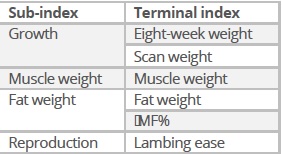
Which traits have changed in the terminal index and why?
The previous index and economic index both include eight-week weight, scan weight and the CT fat and muscle weights. The £ index also includes the IMF% and lambing ease traits. The traits that aren’t included in the £ index that were in the previous index are ultrasound muscle and fat depths and gigot muscularity.
The ultrasound and gigot muscularity traits were removed because these double-counted muscle and fat within an animal as they’re also measured by the CT muscle and fat scores. The addition of IMF% and lambing ease scores in the £ index supports the selection of animals that produce better quality meat and are easier to lamb.
Why has the carcass sub-index been split into muscle and fat weight sub-indexes?
Following feedback from members after using the indexes for a year, it was found that the carcass sub-index was masking the contributions of muscle and fat traits to the sub-index and index. To improve clarity and enable breeders and purchasers to have a better understanding of the genetic merit of an animal for these traits, the carcass sub-index has been split into meat and fat components. The value and ranking of animals for fat traits can now be understood quickly and more simply.
With ultrasound traits not used within the index is it worth me doing it anymore?
Yes, ultrasound measures are strongly correlated to CT scores, so these will still improve the accuracy of your animal’s figures as it is unlikely to be possible to CT scan all animals. Regardless, a scan weight recorded at an average weight of 40kg (around 13-15 weeks of age) is still required. This will be recorded by an ultrasound scanning technician or can be uploaded directly into iTexel by breeders.
How will my flock’s figures be affected if I don’t CT scan any lambs?
If you don’t CT scan any lambs, it is likely that the indexes for your animals will become less accurate over time. CT scanning a couple of lambs per sire used will improve the accuracy of all lambs.
Will the new indexes increase genetic gain for leanness?
No, in fact the opposite is true, there is a positive response to selection for fat weight and IMF% in the new indexes. This means that using the £ indexes will allow the breed to maintain and slightly increase fat weight over time.
Which trait is included to measure for fat?
Two traits are included, fat weight and IMF% (intramuscular fat).
Why isn’t CT lean weight detailed in the Indexes?
CT lean weight is included it is now called muscle weight to better explain the measurement – meat yield.
Which animals will be affected by re-ranking?
Any re-ranking will have affected the animals that previously ranked highly due to double counting the impact of favourable fat (low fat) and muscle scores which inflated their previous index. This will have a greater effect on proven animals than lambs because the breeding values for young animals are less accurate.
Why does an animal with high muscle and carcass values have a low overall index?
The Index balances the value of growth with carcass and reproduction traits (see https://texel.uk/economic-indexes-indexes/). The weighting of these groups means that a high value in one group does not guarantee a high overall index as growth rates contribute more to the value of a lamb than muscle / carcass values. This means that animals with high muscle scores and low growth scores may have an index that is lower than expected based on carcass values alone. Where this occurs, these animals would be good candidates for breeding with animals with high growth scores.
Why do high-ranking animals sometimes appear to gain little value from muscle and fat traits?
One reason that carcass traits may appear to contribute little to the overall economic value is because growth is a major influencer of profit. The relative economic values are high for muscle and fat weight. Relatively low levels of genetic variation in the breeding values for muscle and fat traits contribute to this effect. If anything, the low levels of contribution of muscle and fat weight to the index creates a focus on the need to record better data to inform the EBVs and identify the animals that can contribute more.
Replacement Index Questions
Is the replacement index new for Texels?
The Society has never published an index focused on the maternal traits. So, yes it is new for Texel. It is important because many commercial flocks depend and rely on Texel genetics.
Which traits are included in the replacement index?
The replacement index consists of five sub-indexes for growth (includes the EBVs for eight-week weight and scan weight), muscle weight (includes the EBV for muscle weight), fat weight (includes the EBVs for fat weight and IMF%), reproduction (includes the EBVs for lambing ease, litter size born and maternal ability) and adult size (includes the mature weight EBV).
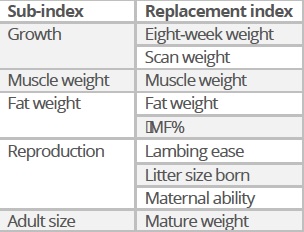
Why has the carcass sub-index been split into muscle and fat weight sub-indexes?
Following feedback from members after using the indexes for a year, it was found that the carcass sub-index was masking the contributions of muscle and fat traits to the sub-index and index. To improve clarity and enable breeders and purchasers to have a better understanding of the genetic merit of an animal for these traits, the carcass sub-index has been split into meat and fat components. The value and ranking of animals for fat traits can now be understood quickly and more simply.
When should I use the replacement index to select rams?
To improve breeding ewe traits, use the replacement index to select your rams and replacement females. This index has more emphasis on adult size and reproduction while retaining a focus on growth and carcass quality.
Commercial farmers should use the replacement index when selecting rams to buy to produce replacements for use and sale.
As a pedigree breeder my aim is to produce rams, the females I produce are a by-product of this selection for terminal qualities, so the replacement index has no value to me.
While this point of view may be true for a proportion of pedigree breeders, it is unlikely to be true for all breeders; in this case, the terminal index is the one to use. The multiplier tier farms that retain daughters from the Texel rams they buy are catered for by breeders that accept some of their clients buy rams and retain their daughters. Similarly, a proportion of pedigree breeders may breed rams to sell for maternal use; in both these cases the replacement index would be relevant.
Rams are also used in the pedigree population and the ‘by-product’ daughters that are retained will express the genetic merit of their sires over the 4-5 years they are in the flock. Irrespective of which index is used to select sires for use in the pedigree flock, the merit of those sires will influence the next generation. Pedigree breeders, even if selling rams only for terminal use, still needs to keep an eye on the maternal index or some key maternal traits, to ensure that the ewes in their pedigree flock function like they need to.
Will I increase mature ewe size by using the replacement index?
The replacement index penalises large mature size because maintenance of larger animals will cost more than maintenance of smaller animals and, therefore, result in reduced profits. This weighting is balanced against the other traits (growth, muscle and fat weight and reproduction) to optimise growth and adult size.
There is an antagonism between the size of ram (where bigger is seen as better) and the size of the mature ewe (commercial producers do not want larger ewes). The reality is that bigger ewes cost money, so breeders of rams to produce commercial females need to slow the rate at which ewes get bigger. Breeders should focus on using and producing rams that are higher merit for the growth sub-index (fast growth) relative to the expected mature size of their daughters (a relatively smaller adult weight sub-index). This requires good complete flock data on mature weight. Ignoring the issue of mature weight would mean ignoring what is a true cost to commercial farmers in keeping bigger ewes.
Work has been completed recently to reduce the emphasis on adult size in the replacement index meaning that less of a penalty is applied.
How have the lambing ease and birth weight breeding values changed and how will this affect the replacement index?
Both lambing ease and birth weight have been updated to capture a maternal effect: the ability of a dam to lamb easily and provide nutrition in utero, respectively. In addition, an ‘environmental dam effect’ (ease of lambs to be born) has been included in lambing ease. It is likely that these changes will increase the spread of breeding values and produce a larger negative economic value for animals that produce difficult lambings.
Genomic Evaluations Questions
What is genomics?
A genome is a sheep’s (or any living thing’s) complete set of DNA, containing all the information needed to build it and genomics is the study of this entire set of DNA. Genomics looks at all genes and how they interact to influence various traits.
How is genomic information collected?
Genomic information is collected from the DNA samples submitted to the Society. These samples are sent to a lab which then characterises the genetic variation at about 50,000 specific locations across each individual sheep’s genome. The markers at these locations are called SNPs (single nucleotide polymorphisms, pronounced ‘snips’) and each one represents a difference in a single DNA building block (nucleotide).
What is a genomic evaluation?
Genomic evaluations in sheep are a modern breeding technique that uses genomic information, typically derived from DNA markers, to assess and improve the genetic potential of individual sheep. This method is particularly valuable in livestock breeding, as it allows for more accurate and efficient selection of animals for desirable traits.
Here’s how genomic evaluations work in sheep breeding:
- DNA Sampling: DNA is extracted from the sheep, usually through a blood or tissue sample. Alternatively, some tests can be done using hair follicles or other non-invasive methods.
- Genotyping: The DNA is genotyped, which involves analysing specific genetic markers or variations in the sheep’s DNA. This information provides insight into the genetic makeup of the animal.
- Data Collection: In addition to genomic data, traditional performance data, such as growth rates, meat and carcase quality and in some breeds wool quality, and reproductive traits, is collected for each sheep.
- Genomic Analysis: A statistical analysis is performed to evaluate the genetic markers and their association with various traits of interest.
- Genomic Estimated Breeding Values: Based on the genomic analysis, breeding values are calculated. These values estimate the genetic potential of the sheep for specific traits. Sheep with higher breeding values are more likely to pass on desirable traits to their offspring.
- Selection: Farmers and breeders use breeding values to make informed decisions about which sheep to breed and which to cull. This selective breeding process can lead to the gradual improvement of the flock’s genetic quality over generations.
Genomic evaluations offer several advantages in sheep breeding, including the ability to:
- Identify desirable traits and genetic potential more accurately.
- Speed up the genetic improvement process by selecting young animals with favourable breeding values
- Reduce the need for extensive and costly phenotypic testing, (trait measurements), although optium levels of trait measures are required to keep the breeding value fuilly informed and accurate..
Overall, genomic evaluations in sheep breeding help increase the accuracy of breeding values, and in controlled breeding programmes improve the efficiency and productivity of the breed.
Genomic evaluations can help to predict future performance more accurately than using simple genetic pedigree information because more detail on the genetic make-up of individual animals is available. This in turn allows breeders to optimise the profitability of their flocks by informing animal selection, supporting strategic breeding decisions. A key feature of genomic evaluations is the development and maintenance of a relevant reference population.
What is a reference population?
A reference population is the standard against which a population that is being studied can be compared. In this case, the genomic reference population is a set of animals that are both genotyped [genomic information collected from ~50,000 markers] and phenotyped for commercially cherished individual traits, such as eight-week weights and scan weights. The Society routinely genotypes all registered sires and will expand its reference population in the coming years.
Are there any other benefits of a genomic evaluation?
Even though all animals may not be genotyped, using the process chosen by the Society, all animals benefit from the genomic evaluation, offering significant value to the entire membership and flock book. The improved accuracies for genotyped animals have knock-on effects, for example by enhancing the accuracy of their parents’, progeny, and siblings’ values, irrespective of those animals being performance recorded.
In addition to providing more accurate breeding value estimates and index values, genomic evaluations are able to confirm an animal’s parentage where genomic information for the progeny and at least one parent is available. This will be relevant to all 2024 and future lamb crops.
How does my flock benefit from a genomic evaluation?
Members benefit by obtaining more accurate breeding value estimates and index values. Genotyped animals will benefit the most as their genomic (DNA) information will be used in the evaluation. In addition, the ability to confirm parentage (where available) will safeguard the integrity of the breed and provide breeders with peace of mind over their flocks and purchases, maintaining the added value provided from Pedigree Texel.
What happens if parentage is not confirmed on my lamb?
In some cases it may not be possible to confirm the parentage of lambs. Only lambs born from 2024-onwards will have parentage confirmed where information is available for one or both parents.
If the DNA samples collected from animals born from 2024-onwards and checked for compatibility with their parent’s samples prove to be incompatible, the owner will be supported and given every chance to correct any mistakes, but will have to bear the costs involved. Support available includes using the genomic database to ‘discover’ who the parent might be, asking the breeder of the lamb for other sires used and potentially re-sampling the lamb. Ultimately, if parentage cannot be determined, then the lamb will be removed from iTexel, the Society flock book.
What is meant by a genotype?
In sheep farming, the word ‘genotype’ is often used to mean different things. For example, historically, if a sheep had a genotype, this would indicate that its Scrapie genotype was known. The list below gives the different uses of the term ‘genotype’ and how the Society differentiates them.
| Term used | Meaning |
| [Animal] genotype | An animal that has been genotyped at many thousands of markers |
| Scrapie genotype | An animal with a Scrapie genotype |
| Microphthalmia genotype (or other single named gene) | An animal with a microphthalmia genotype (or other single named gene) |
| To be genotyped | [verb] The process of characterising many thousands of markers in a DNA sample |
Are there any animals that benefit more than others?
In general, a genomic evaluation provides more information on young unproven animals so these are the best candidates for DNA sampling. The more accurate information can be used to identify replacements, embryo donors and / or AI or stock sires.
How do I request a DNA kit?
Nasal swab DNA test kits must be requested through iTexel as described below, this has been a routine procedure used by members supporting male registrations for many years:
- Log in to iTexel and click on the ‘DNA Kit’ button
- Select ‘DNA profiling’ as the Reason of Request
- Click on ‘+ Add Animal’ and enter the flock book number of the animal you need a kit for. NB> This search will only search live animals that are already in your flock
- Select the animal from the dropdown list that appears as you type
- If its an un-named ram, he will need to be named
- Once complete, the ‘Send Kit Request’ button will be activated to send your request to the Society
Once the Society has received the request, a confirmation email will be sent to the requesting member and a kit put in the post for each animal requested. The DNA kit page on iTexel will be updated so that members can see the status of their request by simply logging in to their iTexel account. When members receive the kit, take the sample as soon as possible, complete the sample submission form and fill in the sample number on iTexel; then return the sample to the Society.
An email receipt will be sent once the sample has been received and again the sample status will update on iTexel. Batches of samples will be submitted regularly to our genotyping laboratory and results uploaded to iTexel with members notified when this has happened. Sample turnaround time can be up to eight weeks from receipt in the office, though this may be extended during very busy periods.
How long does the process take?
The turnaround time for members to receive test results is up to eight-weeks from when the Society has received the DNA sample; though this could be longer during particularly busy periods. Members are encouraged not to delay requesting DNA kits or submitting animals and to avoid the busy seasonal period where they are able to. The society reserves the right to prioritise sample submission to support sales.
Can an [animal] genotype I’ve obtained from another lab be added to the evaluation?
No, only genotypes generated by the Society’s partner lab, accessed via the Texel Society are able to be used.
How do I access the results?
All breeding value results published through iTexel are now from a genomic evaluation. Breeding values and Indexes published from March 1st 2024 are supported with the genomic data, the major changes of which will be some reranking of animals and an increase in accuracy.
Are any specific markers (single gene information) included in the test?
Yes, when an animal is genotyped, the Scrapie and Microphthalmia genotypes are returned for each animal and made available to an animal’s owner through the Gene-tex section of iTexel. This information can be made public at the owners’ discretion.
What happens if my sample ‘fails’ the lab process?
A very small proportion (1-2%) of tests that have been collected as recommended fail the lab QC (quality control) process. If more than 10% of markers tested don’t produce a valid result, then the sample is classed as a failure and a repeat sample from the same animal will be required. To avoid this, it is important to take a good DNA sample and avoid any environmental contamination, and make sure each sample is properly identified and matches the animal tested correctly.
What can cause a sample to fail the lab DNA testing process?
There are several common reasons why samples fail DNA testing, therefore, it’s important that you read the testing instructions carefully and take all necessary precautions when collecting samples from your flock to minimise the need for costly re-testing. Re-testing requires a new sample to be provided at the cost of the member.
General Issues
- Biological contamination
- Cross contamination between samples/animals
- Faecal matter or dirt in sample
Chemical contamination
- Dye/pigment from animal markers
- Insect repellent
- Cleaning agents
Improper storage
- Heat exposure including leaving samples in a vehicle or hot sun
- Exposure to foreign material including mould
- Frozen storage – the freeze/thaw cycle of a self-defrosting unit can degrade DNA
- Extended sample storage – DNA degrades over time
- Insufficient sample
- Improper shipping
Will I need to provide a DNA sample to register a male?
What is the cost of genotyping from March 1st?
For up to date fees, see the Society Fee Sheet.
What is the ram registration fee from March 1st?
For up to date fees see the Society fee sheet.
Recessive Diseases and Microphthalmia Questions
What is Microphthalmia?
Microphthalmia (which means ‘small eye’) is a recessive condition where one or both of a lamb’s eyes don’t grow properly or at all.
What does recessive mean?
‘Recessive’ means that two copies of the recessive version of the gene (one from each parent) are required to cause the condition. In a family where both parents are carriers and do not have the disease, roughly a quarter of their progeny will inherit two recessive versions of the gene and have the condition.
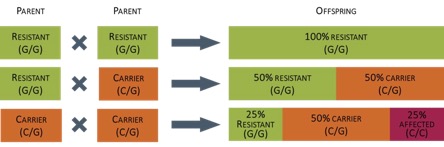
Microphthalmia inheritance pattern
Why do recessive diseases skip generations?
Recessive patterns manifest by skipping generations as the affected are usually progeny of unaffected carriers, that show no symptoms.
How does a recessive disease show up?
If an animal has a recessive gene, it will not display any symptoms. To pass it on to its progeny, both parents need to carry the trait. But because they don’t display any symptoms, breeders often don’t even know if it is present within individual animals or their flocks. And of course, using the table above, the resultant progeny of carrier parents may not be affected, 25% are resistant, 50% carriers (showing no symptoms), and only 25% affected with symptoms.
Members should also be mindful that using carrier parents is allowed and that can also produce resistant progeny, although this practice should be avoided, unless in controlled breeding programs with the risks understood.
This approach is termed gene salvage, where carrier animals can be mated and resultant progeny genotyped to identify resistant progeny, utilising the useful genetics provided from each of the parents, although not without risk of producing carrier animals that may have lower pedigree value than if they were resistant. If this is carried out it is advised that one parent should be resistant, as mating a carrier animal with another carrier animal can cause welfare issues for the resultant progeny, which should be avoided.
Why has the Society decided to act now?
Microphthalmia has always been present within the Texel breed at a very low level. Anecdotal reports from members and the Society’s own investigation, made possible as a result of many years of genotyping and monitoring, indicates that the numbers of carrier animals has increased over the last few years. If this were left unchecked, the increased number of carriers would likely lead to an increased number of clinical cases, with obvious implications for animal welfare and flock management and posing greater challenges for selection as prevalence increases.
What has caused the increase in the number of carriers?
Due to random chance some influential animals are carriers and this has precipitated a process known as ‘genetic drift’ that has caused the rare recessive version of the gene to become more frequent in the population.
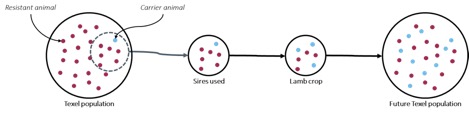
Example of the process of genetic drift.
What does the test tell me?
Every sheep has two versions of the gene, one inherited from each parent. They can, therefore, pass on either to their progeny in approximately a 50:50 ratio. The results from the DNA test will be reported simply as a genotype that is Resistant (G/G) or Carrier (C/G) meaning the test can be used to identify sheep that carry recessive versions of the gene. The ‘G’ version (or allele) is the resistant version of the gene, and the ‘C’ version [allele] is the recessive version. This information allows breeders to monitor whether their sheep are carriers and whether they might produce affected or blind lambs when mated to another animal of known genotype.
How do I test my animals?
Nasal swab DNA test kits must be requested through iTexel as described below, this has been a routine procedure used by members supporting male registrations for many years:
- Log in to iTexel and click on the ‘DNA Kit’ button
- Select ‘DNA profiling’ as the Reason of Request
- Click on ‘+ Add Animal’ and enter the flock book number of the animal you need a kit for. NB: This search will only search live animals that are already in your flock
- Select the animal from the dropdown list that appears as you type
- If its an un-named ram, he will need to be named
- 2026-born ram names start with the letter J
- Once complete, the ‘Send Kit Request’ button will be activated to send your request to the Society
Once the Society has received the request, a confirmation email will be sent to the requesting member and a kit put in the post for each animal requested. The DNA kit page on iTexel will be updated so that members can see the status of their request by simply logging in to their iTexel account. When members receive the kit, take the sample as soon as possible, complete the sample submission form and fill in the sample number on iTexel; then return the sample to the Society.
An email receipt will be sent once the sample has been received and again the sample status will update on iTexel. Batches of samples will be submitted regularly to our genotyping laboratory and results uploaded to iTexel with members notified when this has happened. Sample turnaround time can be up to eight weeks from receipt in the office, though this may be extended during very busy periods.
Do I need to genotype my animals pre-sale?
No, there is no rule that states any animal needs to have been genotyped pre-sale. While some members will choose to do this to create a point of difference for their animals, it is not a sale requirement.
Am I able to test females in my flock?
Yes, providing you’re the listed owner of an animal, (or requesting a kit for a male registration) there is no restriction on the animals you can request a DNA kit for and receive genotype information on.
How do I find out about animals that have already been genotyped?
To support members, the Society has invested more than £5000 to access the Microphthalmia genotypes of sires registered from 2021-onwards. All available genotypes are published on the individual animal pages of iTexel and animal owners can choose to publish them in catalogues and sale charts to support their marketing. For any animals marked as sold or dead on iTexel, the Society will mark them as alive when requested by their last recorded owner so that they can access and publish the information on these rams if they choose to include it in their marketing material.
How do I find out the test results?
Test results will be uploaded to iTexel and members will be informed by email when this is complete. The results will be available on individual animal pages and a member’s Gene-tex page of iTexel. The animal’s primary owner and they can choose to ‘publish’ them, when published, the results will also appear on the animal page, on sale (pen) cards and in catalogues.
How much does the test cost?
Current costs are listed on the fee sheet (available here), with Scrapie management, Maedi Visna and Microphthalmia results made public on iTexel and available on a member’s Gene-tex page. Members then have the option to publish any results which will appear in catalogues and on sale (pen) cards to support the animal’s sale/promotion.
How long does it take to receive test results?
The turnaround time for members to receive test results is up to eight-weeks from when the Society has received the DNA sample; though this could be longer during particularly busy periods. Members are encouraged not to delay requesting DNA kits or submitting animals and to avoid the busy seasonal period where they are able to. The Society reserves the right to prioritise sample submission to support members that have sheep entered to sales.
Are there discounts for bulk orders?
No, the test is priced as competitively as it can be, so there is no scope to offer a cheaper price currently.
Has the male registration fee changed?
Yes, to take into account the genotyping cost, the male registration fees have been reduced accordingly. See the fee sheet.
Do I need to sample my animals again if they’ve been sampled as part of the CT scanning process?
No, an animal’s DNA won’t change, so a sample collected from an animal when it is being CT scanned will have the Scrapie and Microphthalmia results made available to the animal owner at no extra cost. Members also receive subsidised CT costs as part of texelplus services. Learn more about CT scanning here.
I can’t afford to test every animal in my flock, what should I do?
There is no requirement for breeders to do anything, remember more than 97% of animals tested to date are resistant. For those flocks that do want to be more informed, the Society recommend using the following approach:
- Place your main emphasis on testing breeding stock, particularly rams and ewes used as part of ET programmes, as they typically have the most impact on a flock genetically. For larger flocks a focus on testing replacement ewes being retained, or higher quality pedigree stock that may go on to be sold for pedigree breeding, rather than stock that are known to for slaughter or for commercial breeding.
- Keep precise records of test results to be able to follow the recessive version of the gene in your flock (iTexel will help with this).
- Use the test conservatively in the context of the ‘golden rule’ of genetics, where selection for multiple traits limits genetic gain for any given trait. In this context, care needs to be taken in culling carrier sheep as they may have genetic merit for other traits. Breeders should always be cautious about overly narrowing their genetic ‘base’, as this will reduce diversity and may reduce their ability to make genetic gain in other traits and potentially increase inbreeding.
Carrier sheep should be removed from breeding programs at the first practical opportunity, although this remains a decision for the flock owner.
Do I need to cull carrier sheep?
It is not essential to cull carrier sheep. The test and its results are management tools for breeders to use. The genetics of carrier sheep can be salvaged by careful mating and monitoring of their progeny. There is no restriction on the use of these animals for pedigree breeding and no effect on commercial production or concern on animal welfare when used in crossbreeding programs. However, breeders are encouraged, where they can, to breed for resistance to Microphthalmia as this will support the longer-term health of the flock and the breed.
Should I no longer use carrier animals for breeding?
Carrier animals can still be used for pedigree breeding, there are no restrictions on the registration or use of carrier animals. Members should remember that [at a population level] half of the progeny born from a mating that includes a carrier animal will be carriers, although at the individual mating level all progeny could be carriers or all could be resistant.
Should I test embryo transfer donor ewes?
The Society strongly recommends that all pedigree ewes used as part of an ET program are tested as these animals can have a larger influence on a flock’s (and the breed’s) genetics than ewes that are mated naturally or by AI. It will also provide the breeders that are using this technology greater insights into the potential outcomes of ET matings.
All females born from 2025-onwards and used as part of an ET program must be genotyped to be able to add their progeny to iTexel.
Can registered males born earlier than 2026 and are carriers still be used?
Yes, the DNA test and its results are management tools for breeders to use. The genetics of carrier sheep can be salvaged by careful mating and monitoring of their progeny. Breeders are encouraged to breed from resistant animals as best as they are able.
Maedi Visna Questions
What is Maedi-Visna?
Maedi-Visa (or MV) is a fatal, contagious viral disease of sheep, the name comes from the Icelandic ‘Maedi’ for laboured breathing / pneumonia and ‘Visna’ for wasting / shrinkage.
How does the disease spread?
The disease is spread between animals through feeding lambs with infected milk and colostrum, cross-contamination of blood from punches and needles, and through close contact and inhalation of droplets from the nose and mouth. The virus survives for less than a week in the environment.
There is some research evidence that indicates the virus is not usually spread through mating.
Can the virus infect humans?
No, the virus is specific to sheep (and goats).
What are the symptoms?
Maedi-Visna infects sheep of all ages but clinical signs normally appear in older sheep over three-years of age and include:
- Pneumonia
- Progressive weakness leading to paralysis
- Wasting
- Arthritis
- Chronic mastitis
Ill thrift or an increased incidence of pneumonia or mastitis in adult animals can be the first signs of a problem. Low yields of colostrum and milk can result in poor growth rates and increased losses of young animals. The virus can affect the nervous system, and affected ewes may drag one hind leg and become increasingly uncoordinated.
These symptoms are not specific to MV, always consult your vet if you’re having any issues and see if it is worth testing for the virus.
How is it detected?
The disease is highly infectious with a long incubation period, and is difficult to diagnose on clinical signs alone. The disease can be detected in a blood test, though because of the incubation period, animals may not initially test positive for three to six months post-infection. This means many are missed on screening programmes, and several rounds of testing are required to confirm a flock’s status.
If there is no vaccine, what are the treatment options?
Control within flocks is achieved by identifying infected animals via blood tests and culling affected animals.
Is there an accreditation scheme?
Yes, the Premium Sheep & Goat Health Scheme manage an MV accreditation scheme – further information on this can be found on their website:
What could be the impact on my flock?
MV has a long incubation period, and the disease can spread unnoticed for many years before the signs are seen. By this time, it is likely that at least half of the flock is infected that can result in high levels of culling. The potential economic impacts are:
- 10-20% adult mortality after the development of clinical signs
- Lamb mortality and reduced growth rates due to lack of colostrum/milk
- A reduction in conception rates
- Increase in culling rate
How do I avoid buying infected sheep?
Purchasing sheep which appear healthy is no guarantee and all breeders are encouraged to buy MV accredited stock as replacements or quarantine animals and test them for MV before they join the flock.
Can I breed resistant sheep?
Variations in apparent resistance to MV in different breeds has long been recognised, with increased interest in recent years in selecting for genetic resistance to the virus. Mutations in the transmembrane protein gene TMEM154 (of unknown function) have been identified to confer resistance to the disease. Large studies of naturally infected animals have demonstrated lower infection rates in animals homozygous for a resistant allele. There is an estimated 2–3 fold lower risk of seropositivity for MV in affected flocks, though resistance may be dependent on which virus strain animals are infected with.
In addition to providing resistance to initial infection animals with resistance alleles may be better able to control virus infection and clear it to below detectable levels after infection; this offers a promising avenue for breeding for resistance to the virus in sheep.
How many versions of the gene are there?
There are four commonly occurring versions (alleles) of this gene, with two linked to resistance (Allele 1 and Allele 4) and two linked to susceptibility (Allele 2 and Allele 3). Each sheep has two copies of the gene and to be resistant, an animal must possess two identical copies of a resistant allele.
These genotypes do not indicate the MV status of an animal, they will only suggest the ability of these animals to cope with MV, should they come into contact with disease. Animals that are identified as being ‘Resistant’ have been shown to be:
- Less susceptible to infection
- Less likely to spread the causative virus
- Have lesser or no clinical signs
It is important to note, that animals that are identified as being resistant can still have MV but show significantly reduced effects.
Animals can be characterised into one of four classifications:
- Homozygous resistant
- Suspected resistant
- Heterozygous susceptible
- Homozygous susceptible
Each classification is described in the table below, including whether they can be used for breeding resistance to MV. Though as with all breeding decisions, this trait should be considered alongside other breeding criteria and prioritised appropriately.

How can I find out which versions of the gene are in my flock?
For animals that have been genotyped and have data available, the Society has published their genotypes on iTexel and on members’ gene-tex pages. By clicking on the ‘Publish’ icon, the information can also be included in sales catalogues.
Why has the Society decided to act now?
It has only recently become possible to routinely identify the alleles carried by individual sheep in the DNA samples submitted to the Society. Coupled with the delivery platform within iTexel means it is now possible to provide this information for all genotyped animals.
What does the test tell me?
Every sheep has two versions of the gene, one inherited from each parent. They can, therefore, pass on either to their progeny in approximately a 50:50 ratio. The results from the DNA test will be reported simply as two digits (e.g. 1,1). This information allows breeders to monitor which alleles their sheep carry and could inform breeding decisions.
Do I need to genotype my animals pre-sale?
No, there is no rule that states any animal needs to have been genotyped pre-sale. While some members will choose to do this to create a point of difference for their animals, it is not a sale requirement.
How do I test my animals?
Nasal swab DNA test kits must be requested through iTexel as described below, this has been a routine procedure used by members supporting male registrations for many years:
- Log in to iTexel and click on the ‘DNA Kit’ button
- Select ‘DNA profiling’ as the Reason of Request
- Click on ‘+ Add Animal’ and enter the flock book number of the animal you need a kit for. NB: This search will only search live animals that are already in your flock
- Select the animal from the dropdown list that appears as you type
- If its an un-named ram, he will need to be named
- 2026-born ram names start with the letter J
- Once complete, the ‘Send Kit Request’ button will be activated to send your request to the Society
Once the Society has received the request, a confirmation email will be sent to the requesting member and a kit put in the post for each animal requested. The DNA kit page on iTexel will be updated so that members can see the status of their request by simply logging in to their iTexel account. When members receive the kit, take the sample as soon as possible, complete the sample submission form and fill in the sample number on iTexel; then return the sample to the Society.
An email receipt will be sent once the sample has been received and again the sample status will update on iTexel. Batches of samples will be submitted regularly to our genotyping laboratory and results uploaded to iTexel with members notified when this has happened. Sample turnaround time can be up to eight weeks from receipt in the office, though this may be extended during very busy periods.
Am I able to test females in my flock?
Yes, providing you’re the listed owner of an animal (or requesting a kit for a male registration) there is no restriction on the animals you can request a DNA kit for and receive genotype information on.
How do I find out about animals that have already been genotyped
To support members, the Society has worked with researchers from Nottingham University to access the MV genotypes of previously genotyped animals. All available genotypes are published on the individual animal pages of iTexel and animal owners can choose to publish them in catalogues and sale charts to support their marketing. For any animals marked as sold or dead on iTexel, the Society will mark them as alive when requested by their last recorded owner so that they can access and publish the information on these animals if they choose to include it in their marketing material.
How do I find out the test results?
Test results will be uploaded to iTexel and members will be informed by email when this is complete. The results will be available on individual animal pages and a member’s Gene-tex page of iTexel. The animal’s primary owner can choose to ‘publish’ them, when published, the results will also appear on the animal page, on sale (pen) cards and in catalogues.
How much does the test cost?
The current genotyping fees are listed on the Society’s fees sheet that’s available here, and MV results along with Scrapie management and Microphthalmia results will be made public on iTexel and available on a member’s Gene-tex page. Members then have the option to publish any results which will appear in catalogues and on sale (pen) cards to support the animal’s sale/promotion.
How long does it take to receive test results?
The turnaround time for members to receive test results is up to eight-weeks from when the Society has received the DNA sample, though this could be longer during particularly busy periods. Members are encouraged not to delay requesting DNA kits or submitting animals and to avoid the busy seasonal period where they are able to. The Society reserves the right to prioritise sample submission to support members that have sheep entered to sales.
Are there discounts for bulk orders?
No, the test is priced as competitively as it can be, so there is no scope to offer a cheaper price currently.
Do I need to sample my animals again if they’ve been sampled as part of the CT scanning process?
No, an animal’s DNA won’t change, so a sample collected from an animal when it is being CT scanned will have the MV (plus Scrapie and Microphthalmia) results made available to the animal owner at no extra cost.
I can’t afford to test every animal in my flock, what should I do?
There is no requirement for breeders to do anything; for those flocks that do want to be more informed, the Society recommend using the following approach:
- Place your main emphasis on testing breeding stock; because males must be genotyped to be registered, ewes used as part of ET programmes typically have the most impact on a flock genetically. For larger flocks, and those that don’t use ET, focus on testing replacement ewes being retained, or higher quality pedigree stock that may go on to be sold for pedigree breeding, rather than stock that are known to for slaughter or for commercial breeding.
- Keep precise records of test results to be able to follow the alleles in your flock (iTexel will help with this).
- Use the test conservatively in the context of the ‘golden rule’ of genetics, where selection for multiple traits limits genetic gain for any given trait. Breeders should always be cautious about overly narrowing their genetic ‘base’, as this will reduce diversity and may reduce their ability to make genetic gain in other traits and potentially increase inbreeding.
Do I need to cull homozygous susceptible sheep?
It is not essential to cull any sheep – remember, these genes have been present in the breed for decades without causing major problems; the test and its results are management tools for breeders to use. There is no restriction on the use of these animals for pedigree breeding and no effect on commercial production or concern on animal welfare. However, breeders are encouraged, where they can, to breed towards the resistant alleles as this will support the longer term health of the flock and the breed.
Should I no longer use homozygous susceptible animals for breeding?
Homozygous susceptible animals can still be used for pedigree breeding, there are no restrictions on the registration or use of susceptible animals. It is advisable, where possible, to breed homozygous susceptible animals with an animal that carries at least one protective allele. Over time, this approach may increase the number of protective alleles within a flock and the breed.
Should I test embryo transfer donor ewes?
The Society strongly recommends that all pedigree ewes used as part of an ET program are tested as these animals can have a larger influence on a flock’s (and the breed’s) genetics than ewes that are mated naturally or by AI. It will also provide the breeders that are using this technology greater insights into the potential outcomes of ET matings.
All females born from 2025-onwards and used as part of an ET program must be genotyped to be able to add their progeny to iTexel.
Tiered Flock Questions
How much will this cost me?
Nothing. The texelplus service has been replaced and there are no Society fees associated with the tier-based system, providing a unique and inclusive programme to support all members of the Society.
How do I progress through the tiers?
By collecting more information on your animals (mainly weights) and entering it on iTexel. We recommend that all members ‘Go for Gold’. This can be SIMPLY achieved for all flocks without incurring any extra costs.
Why has the Society launched this?
It’s a more inclusive approach, bringing together pedigree and performance into one service. This approach recognises the members that contribute data on multiple traits. Helping to more accurately characterise their animals and the wider Texel breed. Any flock can earn a high-tier status that demonstrates a member’s commitment to flock and breed improvement through the collection of phenotypic data.
I've never weighed my animals before, why should I start now?
Weighing animals (and adding the weights to iTexel) is FREE and EASY and provides information on your lambs’ performance. The information is used to predict their potential, adding another tool to help breeders make evidence-based decisions about their flocks.
Why are the tiers set where they are?
The thresholds between tiers are set to be achievable for all flocks and recognise those flocks that invest in collecting phenotypic information (measurements) to use in their breeding programmes and when marketing their stock, supporting the development of the breed.
What if I have more than one flock?
Each flock is treated individually on iTexel with a flock-specific dashboard available through the iTexel login.
What has happened to the texelplus show classes?
These classes are now open to all flocks that achieve the Gold tier or higher, recognising members that provide phenotypic data on their animals.
I used to use the texelplus reports, can I still access these?
All reports are still available through iTexel, achieving different (higher) tier levels increases a flock’s access to specific reports. See the table below for more details.
| Report | Bronze | Silver | Gold | Platinum & Diamond |
| Pedigree certificate | Y | Y | Y | Y |
| Pedigree sale chart | Y | Y | Y | Y |
| Flock list | Y | Y | Y | Y |
| My flock inbreeding trends | Y | Y | Y | Y |
| Texel breed benchmark | Y | Y | Y | |
| Performance sale chart | Y | Y | ||
| My males | Y | Y | ||
| My females | Y | Y | ||
| My progeny by ram | Y | Y | ||
| My flock genetic trends | Y | Y | ||
| Top stock males | Y | |||
| Top stock females | Y | |||
| Top ram lambs | Y | |||
| Top shearling rams | Y |
Evaluations and Reporting
When we weigh and scan, how are naturally born and reared lambs differentiated from ET lambs that have the advantage of being reared by a very milky commercial ewe?
In the monthly evaluation, natural / AI lambs have the biological (genetic) mother recorded as the rearing dam, whereas ET lambs have the recipient dam recorded as the rearing dam. This differentiation of the rearing dam and inclusion of a maternal effect in traits such as birth weight (the ability of a ewe to provide nutrition in utero) is done to account for the genetic and environmental influence of the [rearing] dam on the lamb’s performance, correcting for these influences allows a more accurate prediction of the lamb’s genetic merit.
How do our lambs compare with other breeders’ that have ad lib creep daily to scanning, when ours will be reared on their natural mothers with limited creep?
The monthly evaluation makes a correction for ‘fixed effects’ such as flock or year, that aims to take into account the variation in management and environment across different flocks. Greater connectivity between flocks (through use of shared rams for example) would improve the accuracy of these corrections.
The change to a genomic evaluation will likely also help to correct for farm-to-farm variation. Analysis of other populations suggests that use of genomic information increases estimates of connectedness and confidence in the breeding values produced.
Do we, as breeders, need so many things included in the full reports?
The full report is provided so that breeders can select the information they need. One breeder may want to see muscle depth figures for their animals whereas another may value CT traits. By providing all information in an editable format (Excel), means breeders are able to use the information that’s of value to them.
Can the summary report show the figures the old Signet figures showed, which were fairly easy to explain to a buyer, perhaps with the columns being smaller?
The summary reports have recently been refined and are designed to be printable on a single A4 page; these include information on index and sub-index values. Following the split of the carcass sub-index, they now also include [separately] the value of muscle and fat traits as well as growth, reproduction and adult size (for the replacement index) alongside the pedigree information.
The inclusion of raw values could be misleading when comparing between animals because they’re influenced by other factors, such as weight. For example, comparing the muscle depth figures of two animals may not be appropriate if one animal weighed 35 kg when measured and the other weighed 55 kg.
We’re encouraged to have our lambs CT scanned which, although subsidised, still involves a cost. If this benefits all breeders, shouldn’t we be paid for taking a day out to do this rather than incurring costs?
CT scanning lambs has multiple benefits to the individual animals scanned, their relatives (likely in the flock of the scanned animal) the breed, and the wider industry.
Because of these layers of benefits, subsidies are applied to the costs of CT scanning from the levy bodies and the Society. Roughly 50% of the costs are subsidised by the levy bodies, with a further ~25% subsidised by the Society, meaning that breeders are only charged for ~25% of the total cost of CT scanning. In addition to this subsidy, the Society fund the collection of DNA and genotyping of all CT scanned Texel animals at no cost to the breeder. This has a higher value than the net CT fee charged and provides further benefits to the flock through increased accuracy of breeding values, confirmation of parentage and Scrapie and Microphthalmia genotype information.
How have the lambing ease and birth weight breeding value calculations changed?
Both lambing ease and birth weight have had the maternal effect calculation updated (this captures the ability of a dam to lamb easily and provide nutrition in utero). In addition, an ‘environmental dam effect’ (ease of lambs to be born) has been included in lambing ease, replacing the litter size group effect. It is likely that these changes will increase the spread of breeding values and produce larger negative values for animals that produce difficult lambings.
Economic Index
What is a £ index?
The £ index represents the extra profit value per commercial lamb produced compared to the population baseline. The higher the value the greater the genetic merit. The calculated values are based on commercial financial data and the animal’s own breeding values. They can be used to rank and compare animals to each other.
How have the £ indexes been developed?
The Society have worked with AbacusBio, global leaders in agricultural consultancy to develop economic models that capture the value of genetic improvement. These models have then been used to calculate multi-trait indexes for Texel animals.
Do any other breeds have £ indexes in the UK?
The Texel is the first sheep breed in the UK to introduce £ indexes based on an economic model. Breeders in Ireland and NZ have been using economic indexes successfully for several years.
What is the benefit of a £ index compared to the previous indexes used by the Society?
The £ index is easier to understand than the previous index and simply presents the relative contributions of related traits that are relevant for both commercial producers and pedigree breeders.
Is the £ index a true relative financial value?
Yes, it is the profit value per lamb born calculated on the assumption that lambs are produced on a grass- and fodder-based commercial system.
Why has a terminal sire breed launched a replacement index?
The Texel is no longer a single-use breed, it is increasingly used to produce replacement females. The most recent study of the breeding structure of the British sheep industry [2021] indicated that over 17% of the national ewe flock contains Texel genetics. Therefore a replacement index is critical to help breeders and producers select the right female replacements, and sires to produce them.
Do we halve the £ index value to get the amount the ram will contribute to his progeny like with previous EBVs?
No, the £ index is the profit per lamb that is due to the sire or dam’s genetics. The halving of values has been included in the index calculations.
Has the baseline which sets the benchmark thresholds (e.g. top 5% and top 1%) been adjusted?
No, it hasn’t been altered, this allows comparison of all animals within the breed against a fixed standard.
Will the ranking of my animals have changed following the launch of the new £ indexes?
There will have been some re-ranking of animals using the terminal index. This is because the £ index contains different traits and emphases than the previous index (Figure 2). The overall goal remains the production of profitable lambs.
Figure 2. Comparison of trait weightings between terminal £ index (outer ring) and previous terminal index (inner ring). Growth traits are in shades of blue, muscle traits in shades of green, fat traits in brown and lambing ease in grey.
I use the texelplus service, how will the reports differ?
The reports have been updated to reflect the new indexes. They are downloadable from the reports page on iTexel in full (Excel) and summary (pdf) format. When logged in to iTexel, texelplus breeders will be able to see indexes for all sheep (not just those in their flocks). Indexes for animals not in texelplus flocks will only be published when their accuracy is above 50%.
Will ewes and rams have the same £ indexes?
Yes, the indexes for all animals have been calculated in the same way and they should be used in the same way for male and female animals. If a pedigree ewe is going to be used to produce replacement females then the replacement index is the one to focus on. If she is going to be used to produce slaughter lambs (or possibly more likely, aim to produce sires that will in turn produce slaughter lambs), then the terminal index will offer greater insights into her genetic potential.
Terminal Index Questions
Which terminal traits are included in the index?
The terminal index consists of three sub-indexes for growth (includes the EBVs for eight-week weight and scan weight), carcass quality (includes EBVs for muscle weight, fat weight and IMF%) and reproduction (includes the lambing ease EBV) (Table 1).
Which traits have changed in the terminal index and why?
The previous index and economic index both include eight-week weight, scan weight and the CT fat and muscle weights. The £ index also includes the IMF% and lambing ease traits. The traits that aren’t included in the £ index that were in the previous index are ultrasound muscle and fat depths and gigot muscularity.
The ultrasound and gigot muscularity traits were removed because these double-counted muscle and fat within an animal as they’re also measured by the CT muscle and fat scores. The addition of IMF% and lambing ease scores in the £ index supports the selection of animals that produce better quality meat and are easier to lamb.
With ultrasound traits not used within the index is it worth me doing it anymore?
Yes, ultrasound measures are strongly correlated to CT scores, so these will still improve the accuracy of your animal’s figures as it is unlikely to be possible to CT scan all animals. Regardless, a scan weight recorded at an average weight of 40kg (around 13-15 weeks of age) is still required. This will be recorded by an ultrasound scanning technician or can be uploaded directly into iTexel.
How will my flock’s figures be affected if I don’t CT scan any lambs?
If you don’t CT scan any lambs, it is likely that the indexes for your animals will become less accurate over time. CT scanning a couple of lambs per sire used will improve the accuracy of all lambs.
Will the new indexes increase genetic gain for leanness?
No, in fact the opposite is true, there is a positive response to selection for fat weight and IMF% in the new indexes. This means that using the £ indexes will allow the breed to maintain and slightly increase fat weight over time.
Which trait is included to measure for fat?
Two traits are included, fat weight and IMF% (intramuscular fat).
Why isn’t CT lean weight detailed in the Indexes?
CT lean weight is included it is now called muscle weight to better explain the measurement – meat yield.
Which animals will be affected by re-ranking?
Any re-ranking will have affected the animals that previously ranked highly due to double counting the impact of favourable fat (low fat) and muscle scores which inflated their previous index. This will have a greater effect on proven animals than lambs because the breeding values for young animals are less accurate.
Replacement Index Questions
Is the replacement index new for Texels?
The Society has never published an index focused on the maternal traits. So, yes it is new for Texel. It is important because many commercial flocks depend and rely on Texel genetics.
Which traits are included in the replacement index?
The replacement index consists of four sub-indexes for growth (includes the EBVs for eight-week weight and scan weight), carcass quality (includes EBVs for muscle weight, fat weight and IMF%), reproduction (includes the EBVs for lambing ease, litter size born and maternal ability) and adult size (includes the mature weight EBV).
When should I use the replacement index to select rams?
To improve breeding ewe traits, use the replacement index to select your rams and replacement females. This index has more emphasis on adult size and reproduction while retaining a focus on growth and carcass quality.
Will I increase mature ewe size by using the replacement index?
The replacement index penalises large mature size because maintenance of larger animals will cost more than maintenance of smaller animals and, therefore, result in reduced profits. This weighting is balanced against the other traits (growth, reproduction and carcass quality) to optimise growth and adult size.
Table 1: Traits included in the terminal and replacement indexes and sub-indexes

Genomic Evaluations Questions
What is genomics?
A genome is a sheep’s (or any living thing’s) complete set of DNA, containing all the information needed to build it and genomics is the study of this entire set of DNA. Genomics looks at all genes and how they interact to influence various traits.
How is genomic information collected?
Genomic information is collected from the DNA samples submitted to the Society. These samples are sent to a lab which then characterises the genetic variation at about 50,000 specific locations across each individual sheep’s genome. The markers at these locations are called SNPs (single nucleotide polymorphisms, pronounced ‘snips’) and each one represents a difference in a single DNA building block (nucleotide).
What is a genomic evaluation?
Genomic evaluations in sheep are a modern breeding technique that uses genomic information, typically derived from DNA markers, to assess and improve the genetic potential of individual sheep. This method is particularly valuable in livestock breeding, as it allows for more accurate and efficient selection of animals for desirable traits.
Here’s how genomic evaluations work in sheep breeding:
- DNA Sampling: DNA is extracted from the sheep, usually through a blood or tissue sample. Alternatively, some tests can be done using hair follicles or other non-invasive methods.
- Genotyping: The DNA is genotyped, which involves analysing specific genetic markers or variations in the sheep’s DNA. This information provides insight into the genetic makeup of the animal.
- Data Collection: In addition to genomic data, traditional performance data, such as growth rates, meat and carcase quality and in some breeds wool quality, and reproductive traits, is collected for each sheep.
- Genomic Analysis: A statistical analysis is performed to evaluate the genetic markers and their association with various traits of interest.
- Genomic Estimated Breeding Values: Based on the genomic analysis, breeding values are calculated. These values estimate the genetic potential of the sheep for specific traits. Sheep with higher breeding values are more likely to pass on desirable traits to their offspring.
- Selection: Farmers and breeders use breeding values to make informed decisions about which sheep to breed and which to cull. This selective breeding process can lead to the gradual improvement of the flock’s genetic quality over generations.
Genomic evaluations offer several advantages in sheep breeding, including the ability to:
- Identify desirable traits and genetic potential more accurately.
- Speed up the genetic improvement process by selecting young animals with favourable breeding values
- Reduce the need for extensive and costly phenotypic testing, (trait measurements), although optium levels of trait measures are required to keep the breeding value fuilly informed and accurate..
Overall, genomic evaluations in sheep breeding help increase the accuracy of breeding values, and in controlled breeding programmes improve the efficiency and productivity of the breed.
Genomic evaluations can help to predict future performance more accurately than using simple genetic pedigree information because more detail on the genetic make-up of individual animals is available. This in turn allows breeders to optimise the profitability of their flocks by informing animal selection, supporting strategic breeding decisions. A key feature of genomic evaluations is the development and maintenance of a relevant reference population.
What is a reference population?
A reference population is the standard against which a population that is being studied can be compared. In this case, the genomic reference population is a set of animals that are both genotyped [genomic information collected from ~50,000 markers] and phenotyped for commercially cherished individual traits, such as eight-week weights and scan weights. The Society routinely genotypes all registered sires and will expand its reference population in the coming years.
Are there any other benefits of a genomic evaluation?
Even though all animals may not be genotyped, using the process chosen by the Society, all animals benefit from the genomic evaluation, offering significant value to the entire membership and flock book. The improved accuracies for genotyped animals have knock-on effects, for example by enhancing the accuracy of their parents’, progeny, and siblings’ values, irrespective of those animals being performance recorded.
In addition to providing more accurate breeding value estimates and index values, genomic evaluations are able to confirm an animal’s parentage where genomic information for the progeny and at least one parent is available. This will be relevant to all 2024 and future lamb crops.
How does my flock benefit from a genomic evaluation?
Members benefit by obtaining more accurate breeding value estimates and index values. Genotyped animals will benefit the most as their genomic (DNA) information will be used in the evaluation. In addition, the ability to confirm parentage (where available) will safeguard the integrity of the breed and provide breeders with peace of mind over their flocks and purchases, maintaining the added value provided from Pedigree Texel.
What happens if parentage is not confirmed on my lamb?
In some cases it may not be possible to confirm the parentage of lambs. Only lambs born from 2024-onwards will have parentage confirmed where information is available for one or both parents.
If the DNA samples collected from animals born from 2024-onwards and checked for compatibility with their parent’s samples prove to be incompatible, the owner will be supported and given every chance to correct any mistakes, but will have to bear the costs involved. Support available includes using the genomic database to ‘discover’ who the parent might be, asking the breeder of the lamb for other sires used and potentially re-sampling the lamb. Ultimately, if parentage cannot be determined, then the lamb will be removed from iTexel, the Society flock book.
What is meant by a genotype?
In sheep farming, the word ‘genotype’ is often used to mean different things. For example, historically, if a sheep had a genotype, this would indicate that its Scrapie genotype was known. The list below gives the different uses of the term ‘genotype’ and how the Society differentiates them.
| Term used | Meaning |
| [Animal] genotype | An animal that has been genotyped at many thousands of markers |
| Scrapie genotype | An animal with a Scrapie genotype |
| Microphthalmia genotype (or other single named gene) | An animal with a microphthalmia genotype (or other single named gene) |
| To be genotyped | [verb] The process of characterising many thousands of markers in a DNA sample |
Are there any animals that benefit more than others?
In general, a genomic evaluation provides more information on young unproven animals so these are the best candidates for DNA sampling. The more accurate information can be used to identify replacements, embryo donors and / or AI or stock sires.
How do I request a DNA kit?
Nasal swab DNA test kits must be requested through iTexel as described below, this has been a routine procedure used by members supporting male registrations for many years:
- Log in to iTexel and click on the ‘DNA Kit’ button
- Select ‘DNA profiling’ as the Reason of Request
- Click on ‘+ Add Animal’ and enter the flock book number of the animal you need a kit for. NB> This search will only search live animals that are already in your flock
- Select the animal from the dropdown list that appears as you type
- If its an un-named ram, he will need to be named
- 2024-born ram names start with the letter H
- Once complete, the ‘Send Kit Request’ button will be activated to send your request to the Society
Once the Society has received the request, a confirmation email will be sent to the requesting member and a kit put in the post for each animal requested. The DNA kit page on iTexel will be updated so that members can see the status of their request by simply logging in to their iTexel account. When members receive the kit, take the sample as soon as possible, complete the sample submission form and fill in the sample number on iTexel; then return the sample to the Society.
An email receipt will be sent once the sample has been received and again the sample status will update on iTexel. Batches of samples will be submitted regularly to our genotyping laboratory and results uploaded to iTexel with members notified when this has happened. Sample turnaround time can be up to eight weeks from receipt in the office, though this may be extended during very busy periods.
How long does the process take?
The turnaround time for members to receive test results is up to eight-weeks from when the Society has received the DNA sample; though this could be longer during particularly busy periods. Members are encouraged not to delay requesting DNA kits or submitting animals and to avoid the busy seasonal period where they are able to. The society reserves the right to prioritise sample submission to support sales.
Can an [animal] genotype I’ve obtained from another lab be added to the evaluation?
No, only genotypes generated by the Society’s partner lab, accessed via the Texel Society are able to be used.
How do I access the results?
All breeding value results published through iTexel are now from a genomic evaluation. Breeding values and Indexes published from March 1st 2024 are supported with the genomic data, the major changes of which will be some reranking of animals and an increase in accuracy.
Are any specific markers (single gene information) included in the test?
Yes, when an animal is genotyped, the Scrapie and Microphthalmia genotypes are returned for each animal and made available to an animal’s owner through the Gene-tex section of iTexel. This information can be made public at the owners’ discretion.
What happens if my sample ‘fails’ the lab process?
A very small proportion (1-2%) of tests that have been collected as recommended fail the lab QC (quality control) process. If more than 10% of markers tested don’t produce a valid result, then the sample is classed as a failure and a repeat sample from the same animal will be required. To avoid this, it is important to take a good DNA sample and avoid any environmental contamination, and make sure each sample is properly identified and matches the animal tested correctly.
What can cause a sample to fail the lab DNA testing process?
There are several common reasons why samples fail DNA testing, therefore, it’s important that you read the testing instructions carefully and take all necessary precautions when collecting samples from your flock to minimise the need for costly re-testing. Re-testing requires a new sample to be provided at the cost of the member.
General Issues
- Biological contamination
- Cross contamination between samples/animals
- Faecal matter or dirt in sample
Chemical contamination
- Dye/pigment from animal markers
- Insect repellent
- Cleaning agents
Improper storage
- Heat exposure including leaving samples in a vehicle or hot sun
- Exposure to foreign material including mould
- Frozen storage – the freeze/thaw cycle of a self-defrosting unit can degrade DNA
- Extended sample storage – DNA degrades over time
- Insufficient sample
- Improper shipping
Will I need to provide a DNA sample to register a male?
What is the cost of genotyping from March 1st?
The test will cost members £25 + VAT.
What is the ram registration fee from March 1st?
Male registrations will cost £10.62 (+VAT) from March 1st. For full details see the Society fee sheet.
Recessive Diseases and Microphthalmia Questions
What is Microphthalmia?
Microphthalmia (which means ‘small eye’) is a recessive condition where one or both of a lamb’s eyes don’t grow properly or at all.
What does recessive mean?
‘Recessive’ means that two copies of the recessive version of the gene (one from each parent) are required to cause the condition. In a family where both parents are carriers and do not have the disease, roughly a quarter of their progeny will inherit two recessive versions of the gene and have the condition.
Microphthalmia inheritance pattern
Why do recessive diseases skip generations?
Recessive patterns manifest by skipping generations as the affected are usually progeny of unaffected carriers, that show no symptoms.
How does a recessive disease show up?
If an animal has a recessive gene, it will not display any symptoms. To pass it on to its progeny, both parents need to carry the trait. But because they don’t display any symptoms, breeders often don’t even know if it is present within individual animals or their flocks. And of course, using the table above, the resultant progeny of carrier parents may not be affected, 25% are resistant, 50% carriers (showing no symptoms), and only 25% affected with symptoms.
Members should also be mindful that using carrier parents is allowed and that can also produce resistant progeny, although this practice should be avoided, unless in controlled breeding programs with the risks understood.
This approach is termed gene salvage, where carrier animals can be mated and resultant progeny genotyped to identify resistant progeny, utilising the useful genetics provided from each of the parents, although not without risk of producing carrier animals that may have lower pedigree value than if they were resistant. If this is carried out it is advised that one parent should be resistant, as mating a carrier animal with another carrier animal can cause welfare issues for the resultant progeny, which should be avoided.
Why has the Society decided to act now?
Microphthalmia has always been present within the Texel breed at a very low level. Anecdotal reports from members and the Society’s own investigation, made possible as a result of many years of genotyping and monitoring, indicates that the numbers of carrier animals has increased over the last few years. If this were left unchecked, the increased number of carriers would likely lead to an increased number of clinical cases, with obvious implications for animal welfare and flock management and posing greater challenges for selection as prevalence increases.
What has caused the increase in the number of carriers?
Due to random chance some influential animals are carriers and this has precipitated a process known as ‘genetic drift’ that has caused the rare recessive version of the gene to become more frequent in the population.
Example of the process of genetic drift.
What does the test tell me?
Every sheep has two versions of the gene, one inherited from each parent. They can, therefore, pass on either to their progeny in approximately a 50:50 ratio. The results from the DNA test will be reported simply as a genotype that is Resistant (G/G) or Carrier (C/G) meaning the test can be used to identify sheep that carry recessive versions of the gene. The ‘G’ version (or allele) is the resistant version of the gene, and the ‘C’ version [allele] is the recessive version. This information allows breeders to monitor whether their sheep are carriers and whether they might produce affected or blind lambs when mated to another animal of known genotype.
How do I test my animals?
Nasal swab DNA test kits must be requested through iTexel as described below, this has been a routine procedure used by members supporting male registrations for many years:
- Log in to iTexel and click on the ‘DNA Kit’ button
- Select ‘DNA profiling’ as the Reason of Request
- Click on ‘+ Add Animal’ and enter the flock book number of the animal you need a kit for. NB> This search will only search live animals that are already in your flock
- Select the animal from the dropdown list that appears as you type
- If its an un-named ram, he will need to be named
- 2024-born ram names start with the letter H
- Once complete, the ‘Send Kit Request’ button will be activated to send your request to the Society
Once the Society has received the request, a confirmation email will be sent to the requesting member and a kit put in the post for each animal requested. The DNA kit page on iTexel will be updated so that members can see the status of their request by simply logging in to their iTexel account. When members receive the kit, take the sample as soon as possible, complete the sample submission form and fill in the sample number on iTexel; then return the sample to the Society.
An email receipt will be sent once the sample has been received and again the sample status will update on iTexel. Batches of samples will be submitted regularly to our genotyping laboratory and results uploaded to iTexel with members notified when this has happened. Sample turnaround time can be up to eight weeks from receipt in the office, though this may be extended during very busy periods.
Do I need to genotype my animals pre-sale?
No, there is no rule that states any animal needs to have been genotyped pre-sale. While some members will choose to do this to create a point of difference for their animals, it is not a sale requirement.
Am I able to test females in my flock?
Yes, providing you’re the listed owner of an animal, (or requesting a kit for a male registration) there is no restriction on the animals you can request a DNA kit for and receive genotype information on.
How do I find out about animals that have already been genotyped?
To support members, the Society has invested more than £5000 to access the Microphthalmia genotypes of sires registered from 2021-onwards. All available genotypes are published on the individual animal pages of iTexel and animal owners can choose to publish them in catalogues and sale charts to support their marketing. For any animals marked as sold or dead on iTexel, the Society will mark them as alive when requested by their last recorded owner so that they can access and publish the information on these rams if they choose to include it in their marketing material.
How do I find out the test results?
Test results will be uploaded to iTexel and members will be informed by email when this is complete. The results will be available on individual animal pages and a member’s Gene-tex page of iTexel. The animal’s primary owner and they can choose to ‘publish’ them, when published, the results will also appear on the animal page, on sale (pen) cards and in catalogues.
How much does the test cost?
The test will cost members £30 + VAT, with both Scrapie management results and Microphthalmia results made public on iTexel and available on a member’s Gene-tex page. Members then have the option to publish any results which will appear in catalogues and on sale (pen) cards to support the animal’s sale/pronotion.
How long does it take to receive test results?
The turnaround time for members to receive test results is up to eight-weeks from when the Society has received the DNA sample; though this could be longer during particularly busy periods. Members are encouraged not to delay requesting DNA kits or submitting animals and to avoid the busy seasonal period where they are able to. The Society reserves the right to prioritise sample submission to support members that have sheep entered to sales.
Are there discounts for bulk orders?
No, the test is priced as competitively as it can be, so there is no scope to offer a cheaper price currently.
Has the male registration fee changed?
Yes, to take into account the genotyping cost, the male registration fees have been reduced accordingly. See the fee sheet.
Do I need to sample my animals again if they’ve been sampled as part of the CT scanning process?
No, an animal’s DNA won’t change, so a sample collected from an animal when it is being CT scanned will have the Scrapie and Microphthalmia results made available to the animal owner at no extra cost. Members also receive subsidised CT costs as part of texelplus services. Learn more about CT scanning here.
I can’t afford to test every animal in my flock, what should I do?
There is no requirement for breeders to do anything, remember more than 97% of animals tested to date are resistant. However, from 2026 all male lambs born that go on to be registered must be genetyped and resistant to Microphthalmia. For those flocks that do want to be more informed, the Society recommend using the following approach:
- Place your main emphasis on testing breeding stock, particularly rams and ewes used as part of ET programmes, as they typically have the most impact on a flock genetically. For larger flocks a focus on testing replacement ewes being retained, or higher quality pedigree stock that may go on to be sold for pedigree breeding, rather than stock that are known to for slaughter or for commercial breeding.
- Keep precise records of test results to be able to follow the recessive version of the gene in your flock (iTexel will help with this).
- Use the test conservatively in the context of the ‘golden rule’ of genetics, where selection for multiple traits limits genetic gain for any given trait. In this context, care needs to be taken in culling carrier sheep as they may have genetic merit for other traits. Breeders should always be cautious about overly narrowing their genetic ‘base’, as this will reduce diversity and may reduce their ability to make genetic gain in other traits and potentially increase inbreeding.
Carrier sheep should be removed from breeding programs at the first practical opportunity, although this remains a decision for the flock owner.
Do I need to cull carrier sheep?
It is not essential to cull carrier sheep. The test and its results are management tools for breeders to use. The genetics of carrier sheep can be salvaged by careful mating and monitoring of their progeny. While male animals born from 2026-onwards will no longer be permitted to be registered as part of the pedigree population. There is no restriction on the use of these animals for pedigree breeding and no effect on commercial production or concern on animal welfare when used in crossbreeding porgrams. However, breeders are encouraged, where they are able to, to breed for resistance to Microphthalmia as this will support the longer term health of the flock and the breed.
Should I no longer use carrier animals for breeding?
Carrier animals can still be used for pedigree breeding, there are no restrictions on the registration or use of carrier animals and there are no restrictions on males born before 2026. Members should remember that [at a population level] half of the progeny born from a mating that includes a carrier animal will be carriers, although at the individual mating level all progeny could be carriers or all could be resistant.
Should I test embryo transfer donor ewes?
The Society strongly recommends that all pedigree ewes used as part of an ET program are tested as these animals can have a larger influence on a flock’s (and the breed’s) genetics than ewes that are mated naturally or by AI. It will also provide the breeders that are using this technology greater insights into the potential outcomes of ET matings.
Can registered males that are carriers still be used?
Yes, the DNA test and its results are management tools for breeders to use. The genetics of carrier sheep can be salvaged by careful mating and monitoring of their progeny. Breeders are encouraged to breed from resistant animals as best as they are able to.
Maedi Visna Questions
What is Maedi Visna?
Maedi-Visa (or MV) is a fatal, contagious viral disease of sheep, the name comes from the Icelandic ‘Maedi’ for laboured breathing / pneumonia and ‘Visna’ for wasting / shrinkage.
How does the disease spread?
The disease is spread between animals through feeding lambs with infected milk and colostrum, cross-contamination of blood from punches and needles, and through close contact and inhalation of droplets from the nose and mouth. The virus survives for less than a week in the environment.
There is some research evidence that indicates the virus is not usually spread through mating.
Can the virus infect humans?
No, the virus is specific to sheep (and goats).
What are the symptoms?
Maedi-Visna infects sheep of all ages but clinical signs normally appear in older sheep over three-years of age and include:
- Pneumonia
- Progressive weakness leading to paralysis
- Wasting
- Arthritis
- Chronic mastitis
Ill thrift or an increased incidence of pneumonia or mastitis in adult animals can be the first signs of a problem. Low yields of colostrum and milk can result in poor growth rates and increased losses of young animals. The virus can affect the nervous system, and affected ewes may drag one hind leg and become increasingly uncoordinated.
These symptoms are not specific to MV, always consult your vet if you’re having any issues and see if it is worth testing for the virus.
How is it detected?
The disease is highly infectious with a long incubation period, and is difficult to diagnose on clinical signs alone. The disease can be detected in a blood test, though because of the incubation period, animals may not initially test positive for three to six months post-infection. This means many are missed on screening programmes, and several rounds of testing are required to confirm a flock’s status.
If there is no vaccine, what are the treatment options?
Control within flocks is achieved by identifying infected animals via blood tests and culling affected animals.
Is there an accreditation scheme?
Yes, the Premium Sheep & Goat Health Scheme manage an MV accreditation scheme – further information on this can be found on their website:
What could be the impact on my flock?
MV has a long incubation period, and the disease can spread unnoticed for many years before the signs are seen. By this time, it is likely that at least half of the flock is infected that can result in high levels of culling. The potential economic impacts are:
- 10-20% adult mortality after the development of clinical signs
- Lamb mortality and reduced growth rates due to lack of colostrum/milk
- A reduction in conception rates
- Increase in culling rate
How do I avoid buying infected sheep?
Purchasing sheep which appear healthy is no guarantee and all breeders are encouraged to buy MV accredited stock as replacements or quarantine animals and test them for MV before they join the flock.
Can I breed resistant sheep?
Variations in apparent resistance to MV in different breeds has long been recognised, with increased interest in recent years in selecting for genetic resistance to the virus. Mutations in the transmembrane protein gene TMEM154 (of unknown function) have been identified to confer resistance to the disease. Large studies of naturally infected animals have demonstrated lower infection rates in animals homozygous for a resistant allele. There is an estimated 2–3 fold lower risk of seropositivity for MV in affected flocks, though resistance may be dependent on which virus strain animals are infected with.
In addition to providing resistance to initial infection animals with resistance alleles may be better able to control virus infection and clear it to below detectable levels after infection; this offers a promising avenue for breeding for resistance to the virus in sheep.
How many versions of the gene are there?
There are four commonly occurring versions (alleles) of this gene, with two linked to resistance (Allele 1 and Allele 4) and two linked to susceptibility (Allele 2 and Allele 3). Each sheep has two copies of the gene and to be resistant, an animal must possess two identical copies of a resistant allele.
These genotypes do not indicate the MV status of an animal, they will only suggest the ability of these animals to cope with MV, should they come into contact with disease. Animals that are identified as being ‘Resistant’ have been shown to be:
- Less susceptible to infection
- Less likely to spread the causative virus
- Have lesser or no clinical signs
It is important to note, that animals that are identified as being resistant can still have MV but show significantly reduced effects.
Animals can be characterised into one of four classifications:
- Homozygous resistant
- Suspected resistant
- Heterozygous susceptible
- Homozygous susceptible
Each classification is described in the table below, including whether they can be used for breeding resistance to MV. Though as with all breeding decisions, this trait should be considered alongside other breeding criteria and prioritised appropriately.
How can I find out which versions of the gene are in my flock?
For animals that have been genotyped and have data available, the Society has published their genotypes on iTexel and on members’ gene-tex pages. By clicking on the ‘Publish’ icon, the information can also be included in sales catalogues.
Why has the Society decided to act now?
It has only recently become possible to routinely identify the alleles carried by individual sheep in the DNA samples submitted to the Society. Coupled with the delivery platform within iTexel means it is now possible to provide this information for all genotyped animals.
What does the test tell me?
Every sheep has two versions of the gene, one inherited from each parent. They can, therefore, pass on either to their progeny in approximately a 50:50 ratio. The results from the DNA test will be reported simply as two digits (e.g. 1,1). This information allows breeders to monitor which alleles their sheep carry and could inform breeding decisions.
Do I need to genotype my animals pre-sale?
No, there is no rule that states any animal needs to have been genotyped pre-sale. While some members will choose to do this to create a point of difference for their animals, it is not a sale requirement.
How do I test my animals?
Nasal swab DNA test kits must be requested through iTexel as described below, this has been a routine procedure used by members supporting male registrations for many years:
- Log in to iTexel and click on the ‘DNA Kit’ button
- Select ‘DNA profiling’ as the Reason of Request
- Click on ‘+ Add Animal’ and enter the flock book number of the animal you need a kit for. NB: This search will only search live animals that are already in your flock
- Select the animal from the dropdown list that appears as you type
- If its an un-named ram, he will need to be named
- 2026-born ram names start with the letter J
- Once complete, the ‘Send Kit Request’ button will be activated to send your request to the Society
Once the Society has received the request, a confirmation email will be sent to the requesting member and a kit put in the post for each animal requested. The DNA kit page on iTexel will be updated so that members can see the status of their request by simply logging in to their iTexel account. When members receive the kit, take the sample as soon as possible, complete the sample submission form and fill in the sample number on iTexel; then return the sample to the Society.
An email receipt will be sent once the sample has been received and again the sample status will update on iTexel. Batches of samples will be submitted regularly to our genotyping laboratory and results uploaded to iTexel with members notified when this has happened. Sample turnaround time can be up to eight weeks from receipt in the office, though this may be extended during very busy periods.
Am I able to test females in my flock?
Yes, providing you’re the listed owner of an animal (or requesting a kit for a male registration) there is no restriction on the animals you can request a DNA kit for and receive genotype information on.
How do I find out about animals that have already been genotyped
To support members, the Society has worked with researchers from Nottingham University to access the MV genotypes of previously genotyped animals. All available genotypes are published on the individual animal pages of iTexel and animal owners can choose to publish them in catalogues and sale charts to support their marketing. For any animals marked as sold or dead on iTexel, the Society will mark them as alive when requested by their last recorded owner so that they can access and publish the information on these animals if they choose to include it in their marketing material.
How do I find out the test results?
Test results will be uploaded to iTexel and members will be informed by email when this is complete. The results will be available on individual animal pages and a member’s Gene-tex page of iTexel. The animal’s primary owner can choose to ‘publish’ them, when published, the results will also appear on the animal page, on sale (pen) cards and in catalogues.
How much does the test cost?
The test will cost members £30 + VAT, and MV results along with Scrapie management and Microphthalmia results will be made public on iTexel and available on a member’s Gene-tex page. Members then have the option to publish any results which will appear in catalogues and on sale (pen) cards to support the animal’s sale/promotion.
How long does it take to receive test results?
The turnaround time for members to receive test results is up to eight-weeks from when the Society has received the DNA sample, though this could be longer during particularly busy periods. Members are encouraged not to delay requesting DNA kits or submitting animals and to avoid the busy seasonal period where they are able to. The Society reserves the right to prioritise sample submission to support members that have sheep entered to sales.
Are there discounts for bulk orders?
No, the test is priced as competitively as it can be, so there is no scope to offer a cheaper price currently.
Do I need to sample my animals again if they’ve been sampled as part of the CT scanning process?
No, an animal’s DNA won’t change, so a sample collected from an animal when it is being CT scanned will have the MV (plus Scrapie and Microphthalmia) results made available to the animal owner at no extra cost.
I can’t afford to test every animal in my flock, what should I do?
There is no requirement for breeders to do anything; for those flocks that do want to be more informed, the Society recommend using the following approach:
- Place your main emphasis on testing breeding stock; because males must be genotyped to be registered, ewes used as part of ET programmes typically have the most impact on a flock genetically. For larger flocks, and those that don’t use ET, focus on testing replacement ewes being retained, or higher quality pedigree stock that may go on to be sold for pedigree breeding, rather than stock that are known to for slaughter or for commercial breeding.
- Keep precise records of test results to be able to follow the alleles in your flock (iTexel will help with this).
- Use the test conservatively in the context of the ‘golden rule’ of genetics, where selection for multiple traits limits genetic gain for any given trait. Breeders should always be cautious about overly narrowing their genetic ‘base’, as this will reduce diversity and may reduce their ability to make genetic gain in other traits and potentially increase inbreeding.
Do I need to cull homozygous susceptible sheep?
It is not essential to cull any sheep – remember, these genes have been present in the breed for decades without causing major problems; the test and its results are management tools for breeders to use. There is no restriction on the use of these animals for pedigree breeding and no effect on commercial production or concern on animal welfare. However, breeders are encouraged, where they can, to breed towards the resistant alleles as this will support the longer term health of the flock and the breed.
Should I no longer use homozygous susceptible animals for breeding?
Homozygous susceptible animals can still be used for pedigree breeding, there are no restrictions on the registration or use of susceptible animals. It is advisable, where possible, to breed homozygous susceptible animals with an animal that carries at least one protective allele. Over time, this approach may increase the number of protective alleles within a flock and the breed.
Should I test embryo transfer donor ewes?
The Society strongly recommends that all pedigree ewes used as part of an ET program are tested as these animals can have a larger influence on a flock’s (and the breed’s) genetics than ewes that are mated naturally or by AI. It will also provide the breeders that are using this technology greater insights into the potential outcomes of ET matings.
All females born from 2025-onwards and used as part of an ET program must be genotyped to be able to add their progeny to iTexel.
Tiered Flock Questions
How much will this cost me?
Nothing. The texelplus service has been replaced and there are no Society fees associated with the tier-based system, providing a unique and inclusive programme to support all members of the Society.
How do I progress through the tiers?
By collecting more information on your animals (mainly weights) and entering it on iTexel. We recommend that all members ‘Go for Gold’. This can be SIMPLY achieved for all flocks without incurring any extra costs.
Why has the Society launched this?
It’s a more inclusive approach, bringing together pedigree and performance into one service. This approach recognises the members that contribute data on multiple traits. Helping to more accurately characterise their animals and the wider Texel breed. Any flock can earn a high-tier status that demonstrates a member’s commitment to flock and breed improvement through the collection of phenotypic data.
I've never weighed my animals before, why should I start now?
Weighing animals (and adding the weights to iTexel) is FREE and EASY and provides information on your lambs’ performance. The information is used to predict their potential, adding another tool to help breeders make evidence-based decisions about their flocks.
Why are the tiers set where they are?
The thresholds between tiers are set to be achievable for all flocks and recognise those flocks that invest in collecting phenotypic information (measurements) to use in their breeding programmes and when marketing their stock, supporting the development of the breed.
What if I have more than one flock?
Each flock is treated individually on iTexel with a flock-specific dashboard available through the iTexel login.
What has happened to the texelplus show classes?
These classes are now open to all flocks that achieve the Gold tier or higher, recognising members that provide phenotypic data on their animals.
I used to use the texelplus reports, can I still access these?
All reports are still available through iTexel, achieving different (higher) tier levels increases a flock’s access to specific reports. See the table below for more details.
| Report | Bronze | Silver | Gold | Platinum & Diamond |
| Pedigree certificate | Y | Y | Y | Y |
| Pedigree sale chart | Y | Y | Y | Y |
| Flock list | Y | Y | Y | Y |
| My flock inbreeding trends | Y | Y | Y | Y |
| Texel breed benchmark | Y | Y | Y | |
| Performance sale chart | Y | Y | ||
| My males | Y | Y | ||
| My females | Y | Y | ||
| My progeny by ram | Y | Y | ||
| My flock genetic trends | Y | Y | ||
| Top stock males | Y | |||
| Top stock females | Y | |||
| Top ram lambs | Y | |||
| Top shearling rams | Y |