British Texel
Proven. Pedigree. Performance

The British Texel is recognised worldwide for its outstanding balance of muscle, efficiency, and adaptability, making it one of the most influential sheep breeds in modern livestock farming.
The British Texel is a medium-sized sheep with a long, rectangular body, level back and moderate bone structure, combining strength with production efficiency. Its hallmark traits include pronounced muscling and natural leanness, producing high-value carcasses suited to modern markets. Pedigree Texels display a well-proportioned frame, fine white hair, and a quality fleece of medium length and high crimp, typically 34 microns or finer.
Society Export Register
Members who wish to be included on the register should enrol by emailing office@texel.co.uk. All Members on the register will be circulated with any appropriate enquiries as they are received at the Society office.
Further information on imports & exports is available from britishlivestockgenetics.com or defra.gov.uk or ukecp.com
Breed Influence
British Texel Sheep dominate the GB sheep industry. With 13M ewes in the British breeding flock*,

- A new cohort of British Texel rams adds £3.34m of profit to commercial farms over their lifetime
- British Texel are adding £23.5M more to the industry every year through genetic improvement

British Texel Genetics Provide
The British Texel is a breed that has earned its global reputation for performance, adaptability and profitability. Whether purebred or crossed, Texel genetics deliver consistent results in a wide range of environments and production systems — from the uplands to intensive lowland flocks.
Performance at Every Level
- Continued genetic progress – British Texel terminal index shows a 15.5% increase in genetic gain in the last five years ³

Adaptable and Reliable
The Texel is a breed that thrives anywhere. Renowned for its ability to blend successfully with other breeds, it consistently produces the ideal butcher’s lamb for today’s markets — well-muscled, lean and efficient.
Texel ewes are hardy and self-sufficient, requiring no heavy feeding to rear twin lambs. They perform well on upland grazing and excel on improved pastures. When crossed with native breeds, the Texel passes on valuable forage conversion and growth efficiency, ensuring that prime lambs can be finished economically from grass-based systems.
Producers who use Texel rams quickly see the benefits: fast-growing lambs, higher yields and better killing-out percentages, with carcasses that stay lean even at higher weights.
British Texel Sheep are:
✔ Efficient
✔ Resilient
✔ Prolific
✔ Excellent maternal qualities
✔ High growth rates off grass
✔ Earn Premium prices as prime, store and breeding sheep
Society Services

World’s largest pedigree Texel registry

Data-driven approach to advancing the breed’s genetic potential
Engaged in international collaborative research programmes
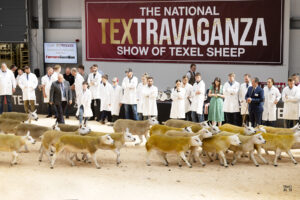
Leads 2,000 membership flocks in breed development, promotion & marketing
Export Successes
- Global demand for British Texel genetics
- Proven success across Europe, the Americas & Australasia
- Elite livestock semen & embryo exports driving global flock performance
- Sharing expertise through international partnerships
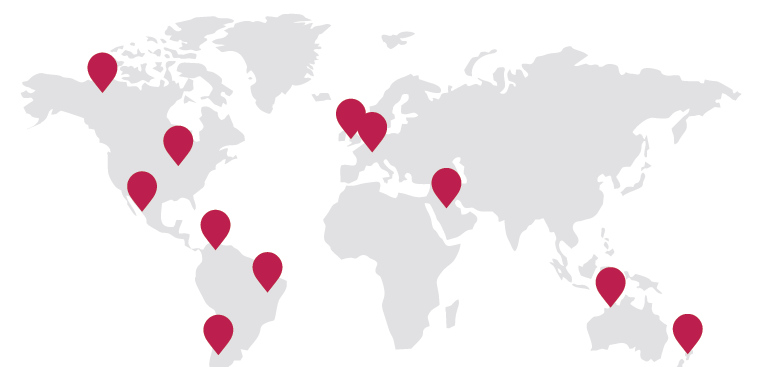
While exports to Ireland have long been a cornerstone of British genetics trade, demand from elsewhere in Europe has increased notably over the years
Among the most significant exports were large consignments to Switzerland, with more than 150 Texels exported in 2015 and 2016, following smaller shipments in earlier years. British Texel stock also found homes in France, Belgium, The Netherlands, Sweden, and Germany, with semen and embryos from leading UK flocks in strong demand across the continent.
Interest in British Texel genetics has grown rapidly across both North and South America. In the United States, exports ramped up again following earlier shipments of semen in the early 2000s, renewing commercial and breeding interest in the breed.
In South America, demand for UK Texel genetics has been particularly strong, with semen and embryos from high-performance animals sought after in Argentina, Brazil, Chile, and Paraguay.
The Society’s promotional work in the region has been extensive, with early visits by Society representatives, followed by former chief executive Steve McLean’s visit to Guyana in 2006, where a collaboration was established with the Georgetown Vet School to create a Texel flock.
This was further developed by John Yates’s 2009 visit to FEINCO, South America’s largest indoor sheep event, where enthusiasm for British Texels was clear. Success continued as South American progeny from UK genetics went on to achieve multiple show and sale titles.
In 2023, John Yates and Society vice chairman Pete Mitchell represented the Society at the first Regional Texel Congress of Mercosur at Expo Melilla, Montevideo, strengthening the breed’s presence across the region.
In July 2024, the Society hosted an International Visitors workshop hosting from Uruguay and Chile for a week, visiting British Texel flocks, learning about the Society’s Research and Development work and attending Shows.
Exports to New Zealand marked another milestone in the global expansion of the British Texel breed. In 2016, the first direct shipment of UK Texel semen arrived in New Zealand, establishing a new chapter for collaboration and the spread of elite British Texel genetics in Australasia.